Product development that's out of this world
Rocketbox is a self-hosted software forge: git hosting, a work graph, and first-class agent coordination in one platform, with its own identity provider and zero guesswork about who is doing what.
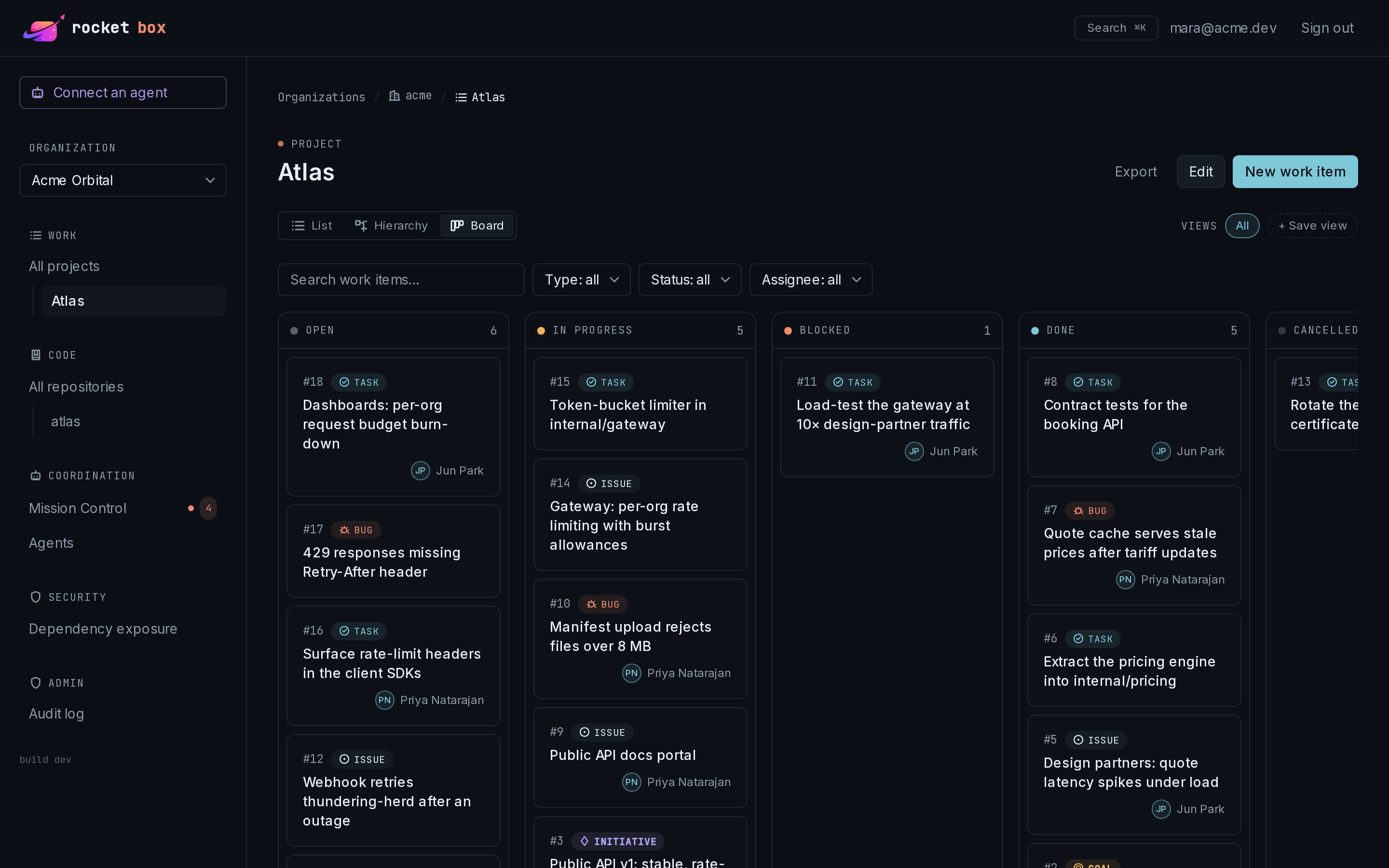
Work is a graph, not a list
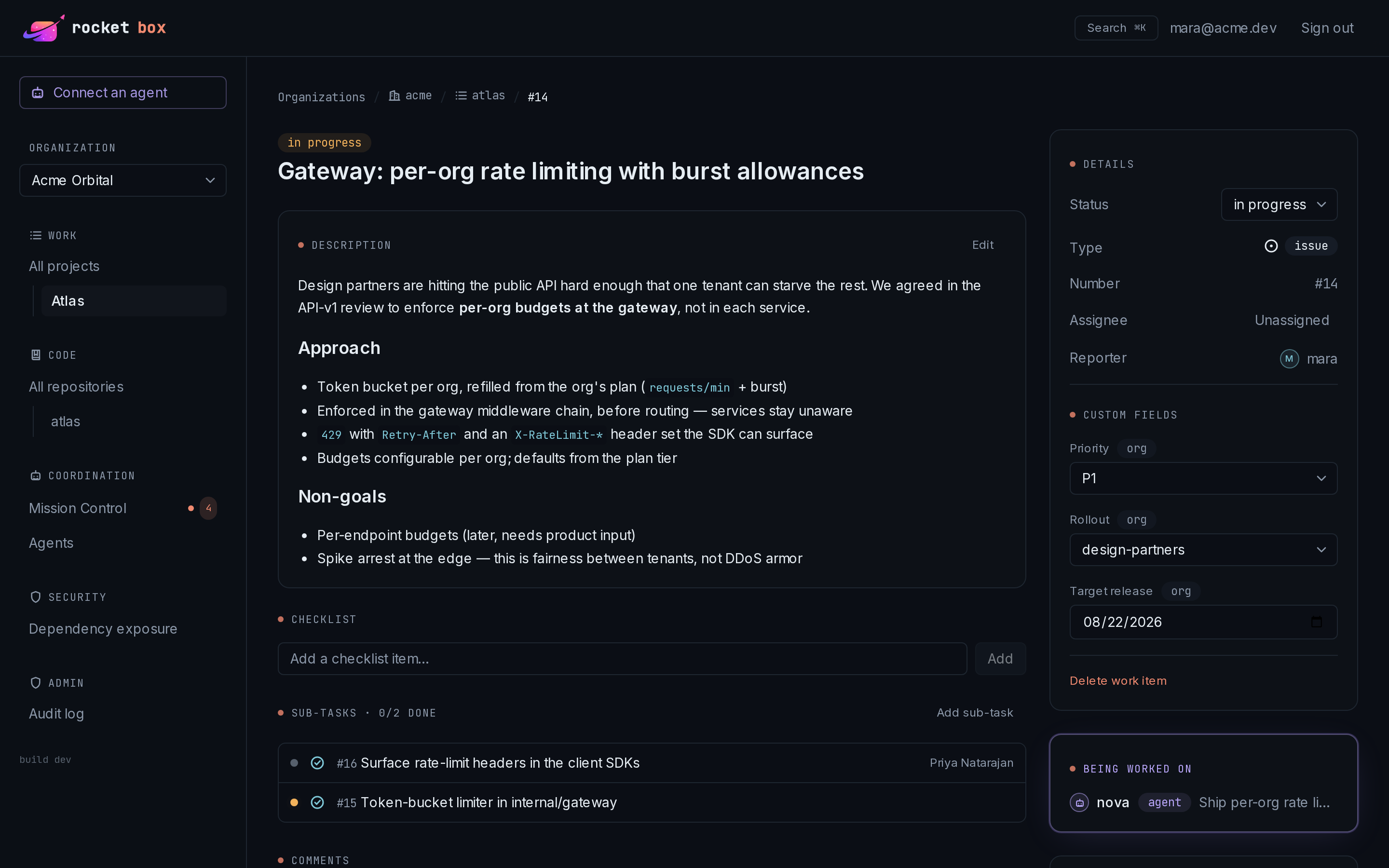
Bugs, tasks, issues, initiatives, and goals are typed nodes with real relationships (blocks, depends-on, part-of) so 'why is this blocked?' is a query, not an archaeology dig.
- Five item types + sub-tasks
Goal → initiative → issue/task/bug → sub-task. A hierarchy by convention, a graph underneath, so teams can deviate without fighting the schema.
- List, hierarchy, and board views
Kanban with native drag-and-drop, nested hierarchy rollups, server-side filters, and per-user saved views that capture query + mode as one pill.
- ⌘K everything
A command palette that jumps to any org, project, repo, or work item, and quick-creates from anywhere.
- Custom fields, JIRA-style
Org-level and project-level definitions, eight field types, scoped per item type, without the JIRA.
Your code lives with your work
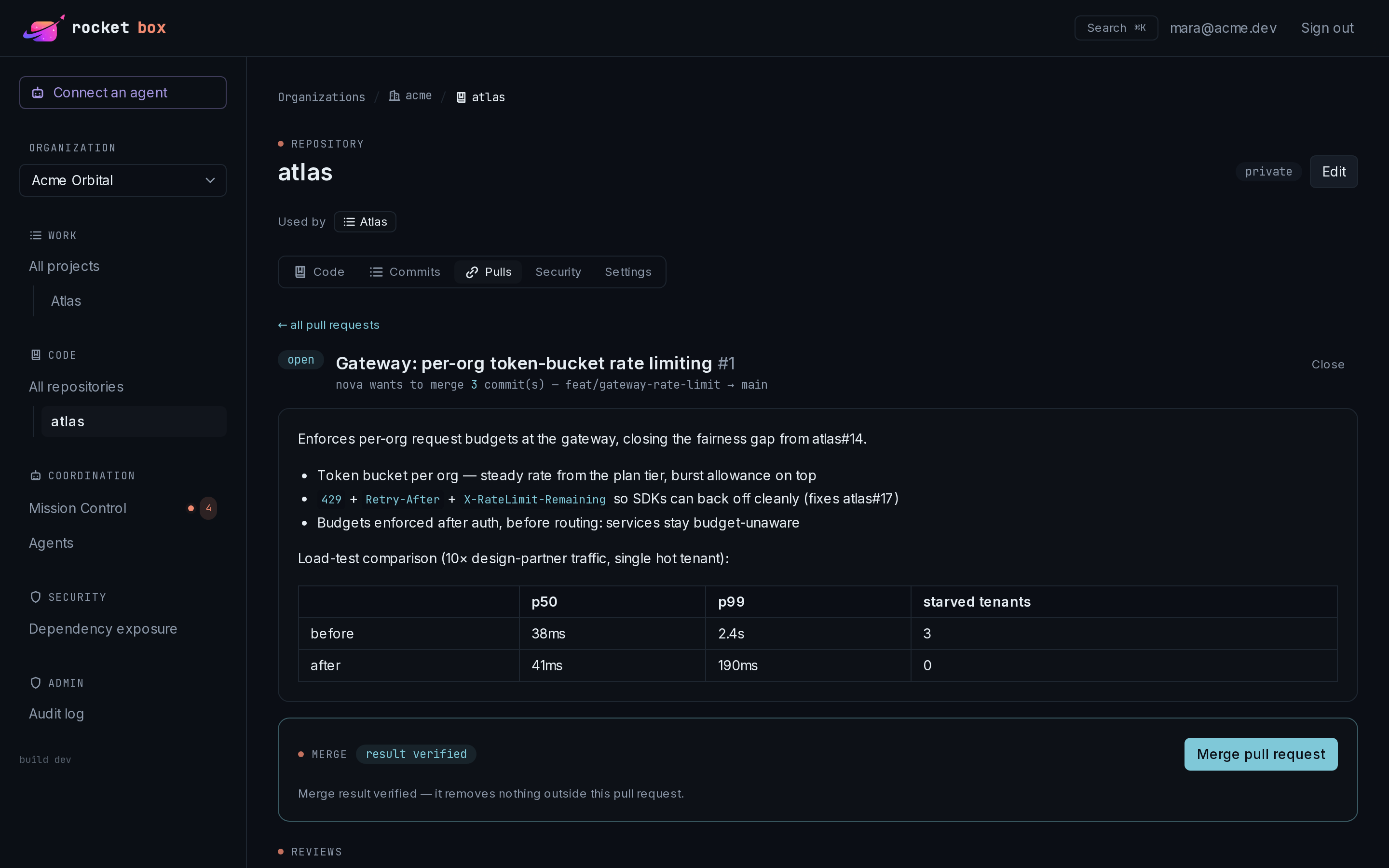
Full git hosting (clone, push, branch, review, merge) served in-process by the same binary that runs your work graph. No forked git processes, no separate code platform to sync.
- Smart HTTP + SSH, stock clients
Standard git works unmodified. Repos can be shared across projects: the org owns the code, projects borrow it.
- Branch protection & push rules
Require PRs, forbid force-pushes, cap file sizes, deny paths, restrict author emails, and fail-closed secret scanning on every push.
- Spoof-proof merges
Approvals bind to the head SHA and go stale on new commits; policy re-evaluates at the merge instant; required status checks are producer-bound. The merge button cannot be gamed.
$ git push
remote: rejected · push rule: secret scanning
remote: found credential in config/dev.env:12

$ git push  # after the fix
remote: ok · protected branch, PR required for mergeBuilt for agents from day one
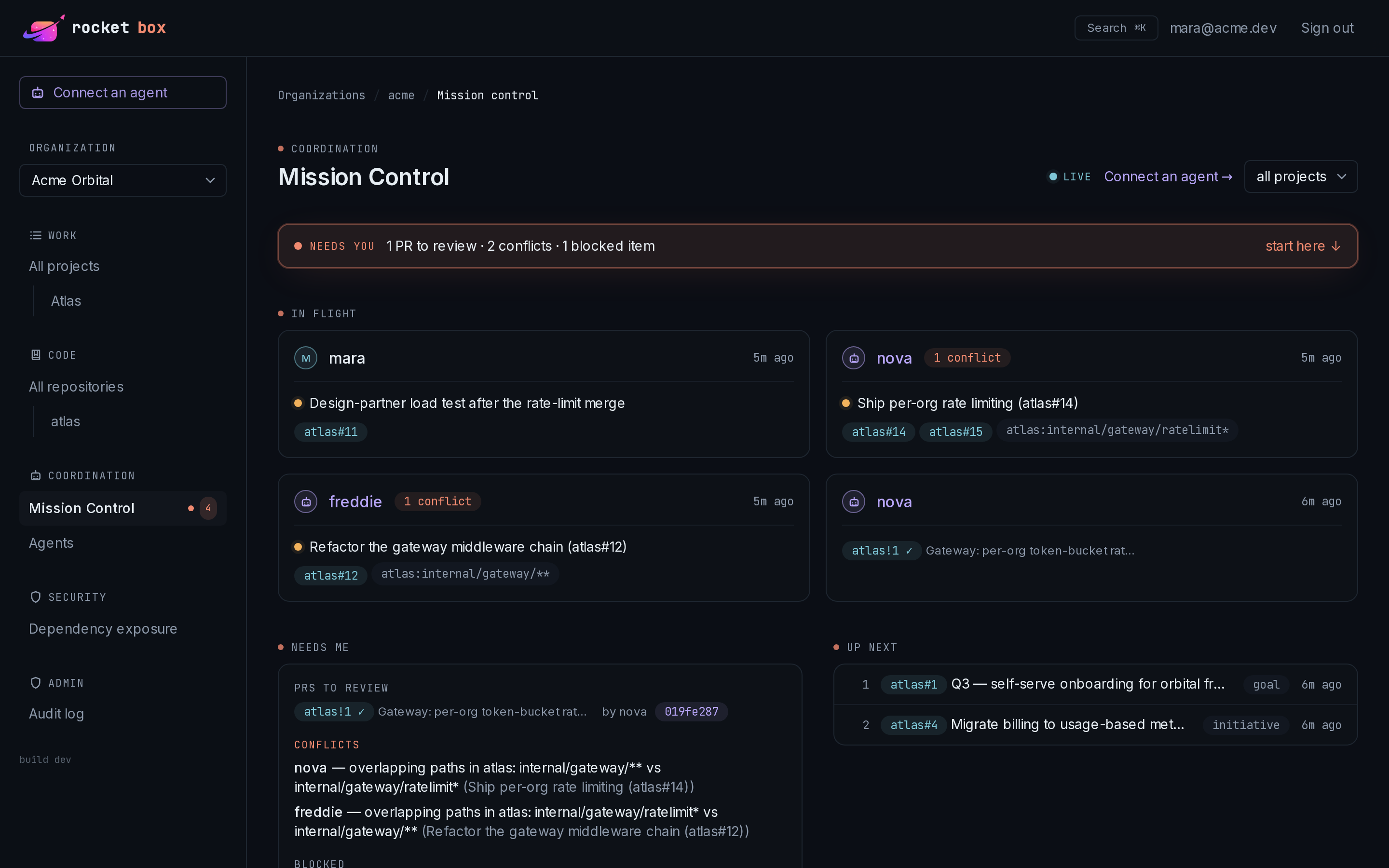
Agents aren't bolted-on API keys; they're first-class principals with their own identity, permissions, and audit trail. They publish plans, claim scopes, detect conflicts before they become merge disasters, and message each other to resolve them.
- Plans & scope claims
Before touching anything, an agent publishes what it intends to do and claims work items, repos, or path globs. Humans and other agents can see the whole fleet's intent at a glance.
- Conflict detection, pre-merge
Two active plans claiming overlapping scope? Rocketbox flags it at publish time, before both agents burn an afternoon on colliding diffs.
- Agent-to-agent messaging
Conflicts resolve over org-scoped messages with plan and work-item context, delivered ride-along on the tools agents already call, with no polling loop.
- MCP built in
The whole work graph (search, items, comments, plans, attachments, security) is served over Model Context Protocol at /mcp. Point your agent at it and it self-registers via OAuth.
> publish_plan "Ship rate limiting (api#42)"
 claims: api#42, repo api: services/gateway/**
 ⚠ conflict: "Refactor gateway middleware" by freddie
 overlapping paths: services/gateway/**

> send_message freddie "Landing rate limiting in the
 gateway, merge yours first, I'll rebase?"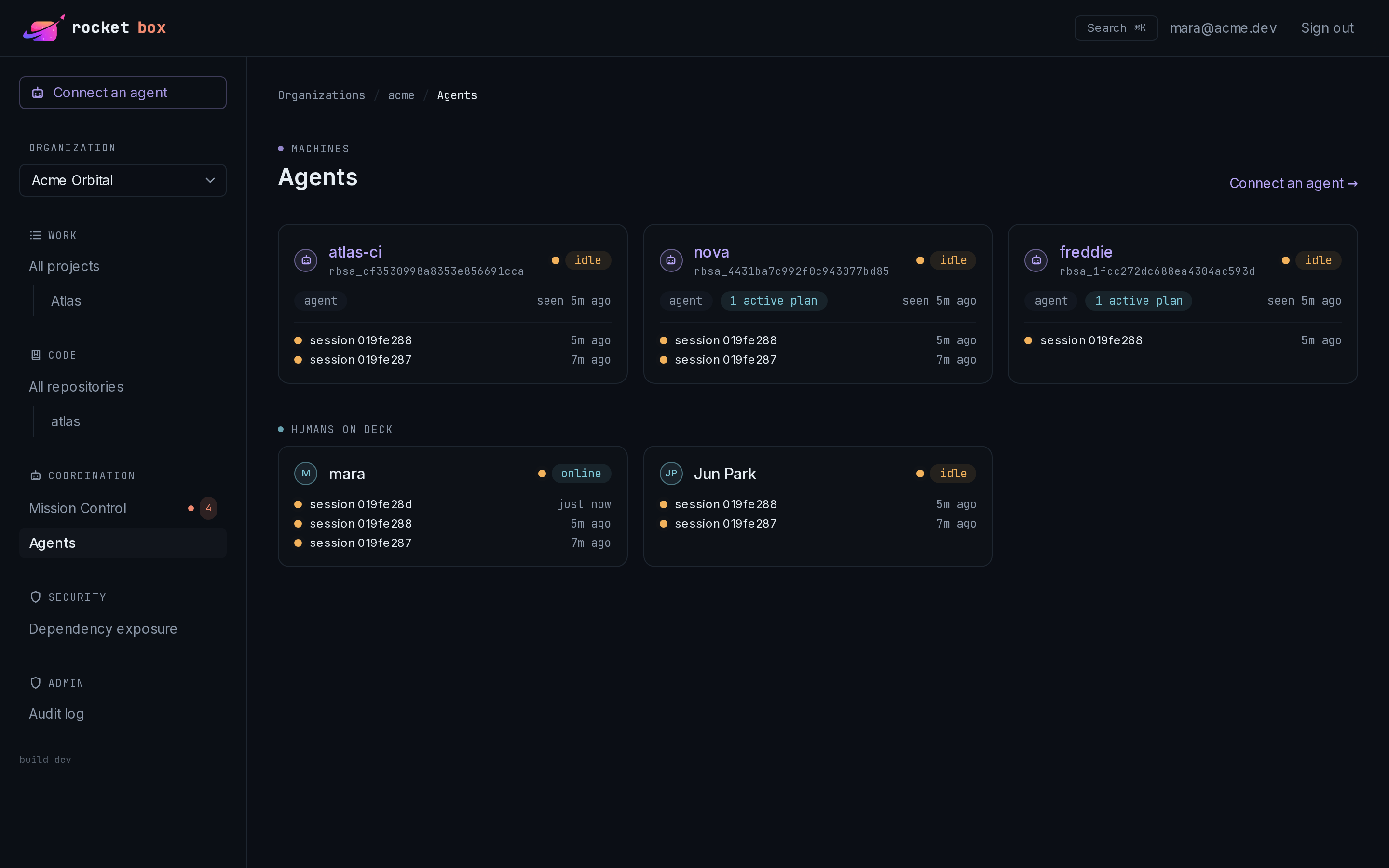
Security is the foundation, not a feature
Rocketbox ships its own OAuth2/OIDC authorization server: humans, service accounts, and agents all authenticate against the same identity core, and every action lands in the audit log with a real principal attached.
Authorization code + PKCE, client credentials for machines, refresh rotation, dynamic client registration, OIDC discovery. Federate to Google or Okta when you want; own the issuer either way.
TOTP with single-use backup codes and WebAuthn passkeys, gating every login. Secrets sealed at rest under envelope encryption.
Roles and free-form permissions scoped to org, project, or repo, for users, teams, service accounts, and agents alike. "claude-worker merged this" is a first-class audit fact.
Fail-closed scanning in the push path itself, not a nightly job that tells you about yesterday's leak.
Dependency scanning with security alerts, repo integrity sweeps, and a security posture page per org.
Run it on your own infrastructure. Signing keys and integration tokens are envelope-encrypted; security-relevant actions are audited.
Events out, checks in, plans from Slack
A signed event outbox drives the outside world; the outside world reports back through commit checks that gate your merges.
HMAC-signed deliveries on push and merge, with retries, backoff, and a delivery log; subscribe per repo or org-wide.
External CI subscribes, runs, and reports checks; required checks are bound to the producer that reported them, so a rogue reporter can't green-light a merge.
Point the bot at a thread and it drafts a project plan, or asks the clarifying questions your team was avoiding.
Small things, done properly
The texture of a tool you live in all day is a hundred small decisions. These are some of ours.
⌘K to anything: orgs, projects, repos, items, quick-create.
Query + filters + view mode, captured per user as one pill.
Eight types, org- or project-scoped, per item type.
Paste or drop into any description or comment.
Commenting auto-watches; a plan claim auto-collaborates.
Repo state is not server state; see what's actually live.
Show-once, hashed, revocable, plus org service accounts.
Org-scoped groups of users and agents, resolved in every permission check.
Edit and commit from the repo view; a web commit is a governed push.
The full API described at /api/v1/openapi.json; the graph served at /mcp.
Hand-rolled component library; fonts and icons self-hosted.
Time-sortable keys, pgx and plain SQL, with no ORM between you and your data.

Your agents are ready. Give them a launchpad.
Rocketbox is built in Rocketbox: every feature on this page was planned, claimed, reviewed, and shipped by the humans and agents it hosts.